

 View larger
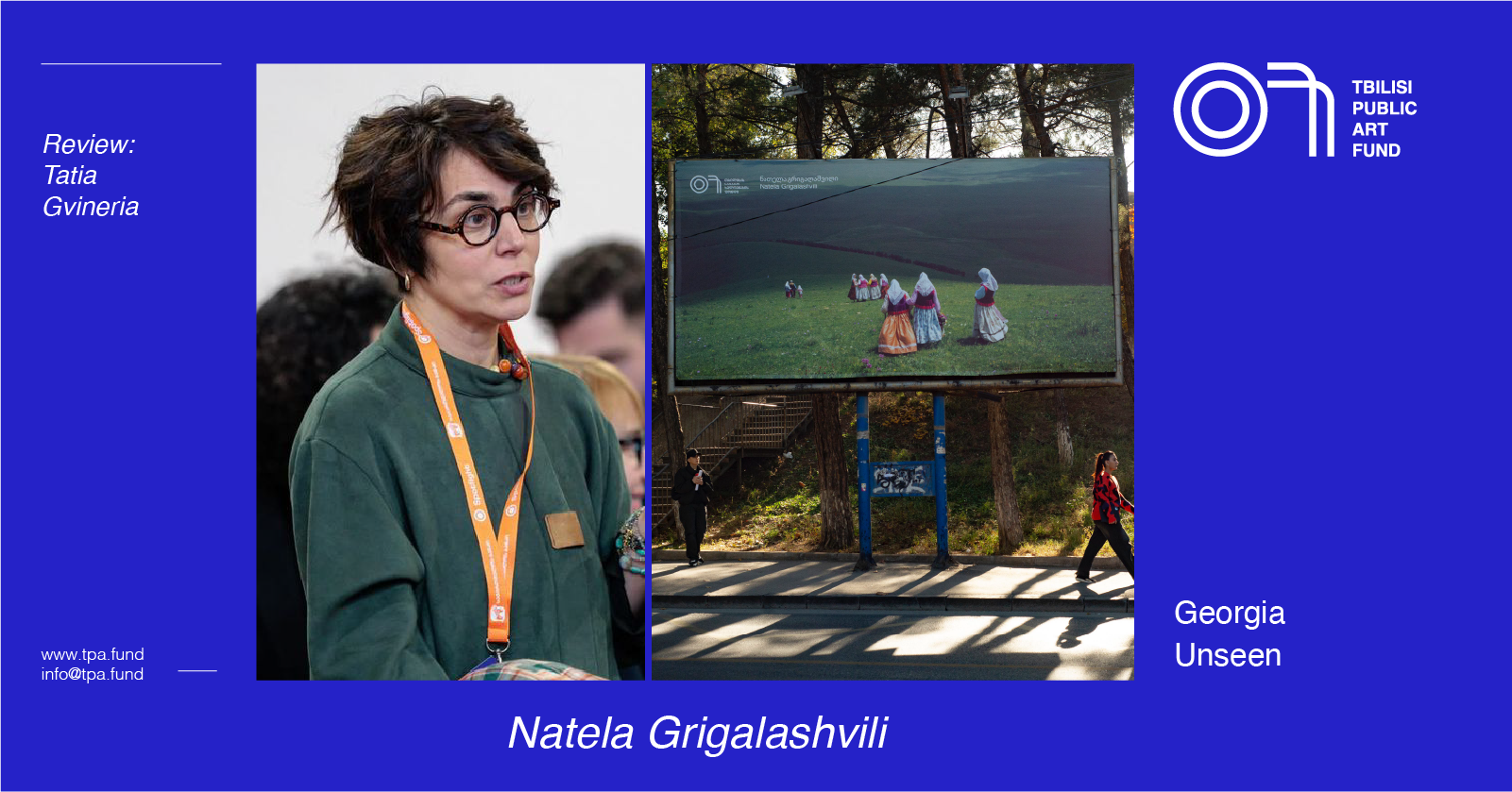
Tatia Gvineria: “I was walking through a green field like a red poppy”, About Natela Grigalashvili’s photography
= More info =
Much time has passed since the discovery of photography, to some extent, took over the centuries-old tasks of painting... Photography, as a new medium, seemed to free painting from its traditional obligations and gave it a new artistic meaning. Later, photography itself underwent a transformation, although the main task of "seeing reality" did not change.
I first saw Natela Grigalashvili's photographs many years ago, and the emotion, or rather, the strong feeling, that I got from these works has not changed to this day. Neither my attitude has changed, nor has Natela Grigalashvili's photography lost its strong emotional impact on the viewer. Moreover, the more photographs she takes, the more she reveals a strong, deep, and fundamental quality of seeing a reality that evokes invisible, hidden emotions and, with a very realistic, narrative depiction and seemingly magical artistic techniques, forces the viewer to stop and think for a moment. The emotion received from the photographs never leaves your mind. You never forget her works, and even after seeing them once, you can distinguish them from a thousand.
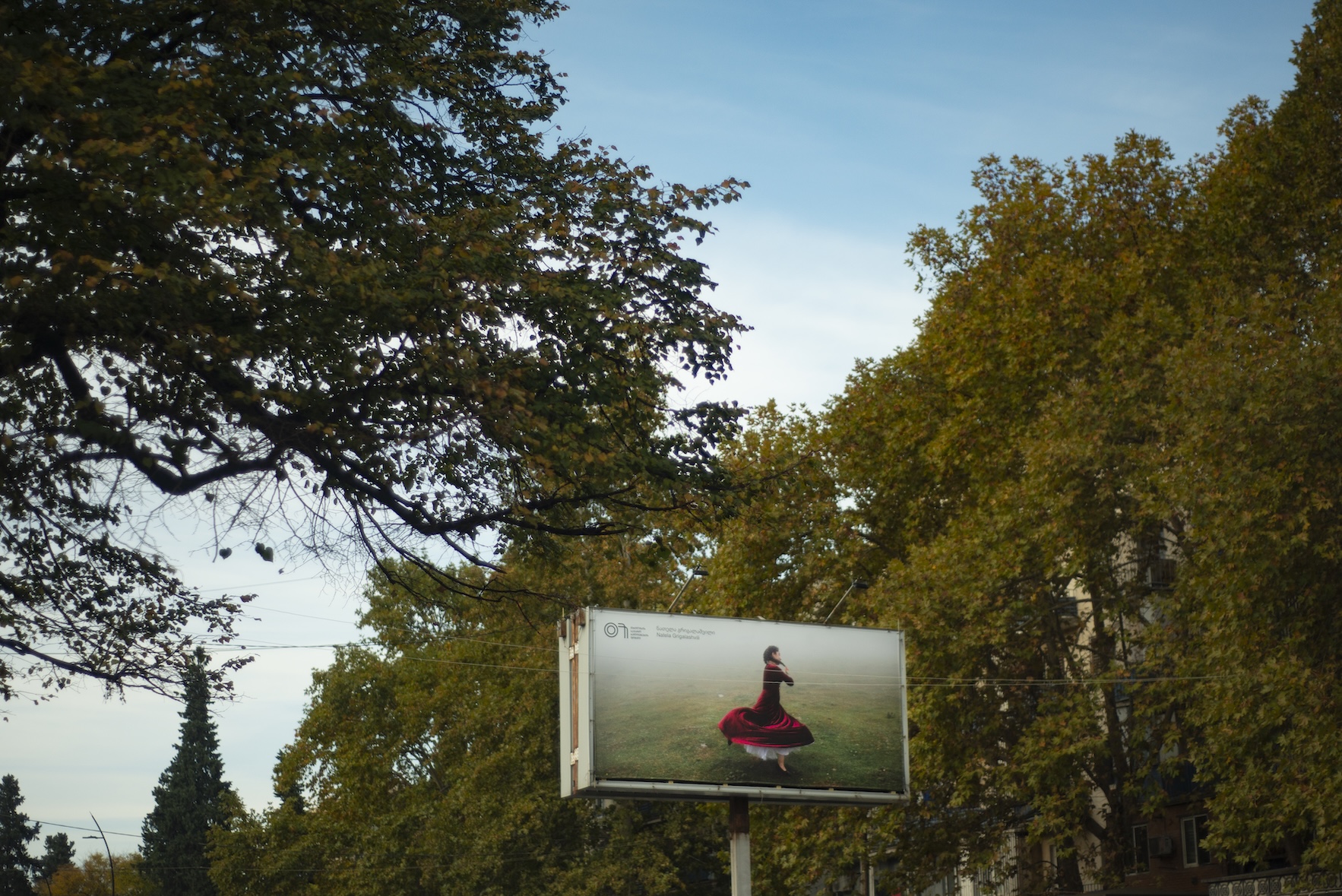
Natela Grigalashvili, Georgia Unseen, Billboards around the City, 2025
Natela Grigalashvili's work raises one of the most fundamental questions in the theory of modern photography: where does the documentary reflection of reality end and where does art begin? Can documentary photography rise to the heights of art? Photography, as an objective chronicler, captures facts that, without interpretation, simply present a mirror of reality. Photography, as an art, comprehends the world in a subjective, emotional, poetic way. Is it possible to reduce this boundary or completely erase it?
Natela Grigalashvili's works are not only on the edge, but also shatters it. Her shots, taken in villages, on roads, in yards and houses, are truly fragmented episodes of reality, stopped in time (and not frozen). However, the photographer, with some magical power, shows us not only real facts, but also the coexistence of character and environment, past and present, conscious and subconscious. She shows us the biography of each character, theme and environment, tells us about their traditions, lifestyle, desires or pain, however, in such a way that she never judges them, on the contrary, she depicts their true, natural face with great human love. This is a reflection of documentary reality with maximum tolerance.
Another very important aspect for understanding Natela Grigalashvili's works is painting with light. The author, through compositional understanding, mastery of natural light, and individual intuition, goes beyond the mere mechanical fixation of the frame. In her works, the boundary between photography and painting disappears, as visually readable, actually “perceived,” and emotionally felt dimensions work simultaneously here.
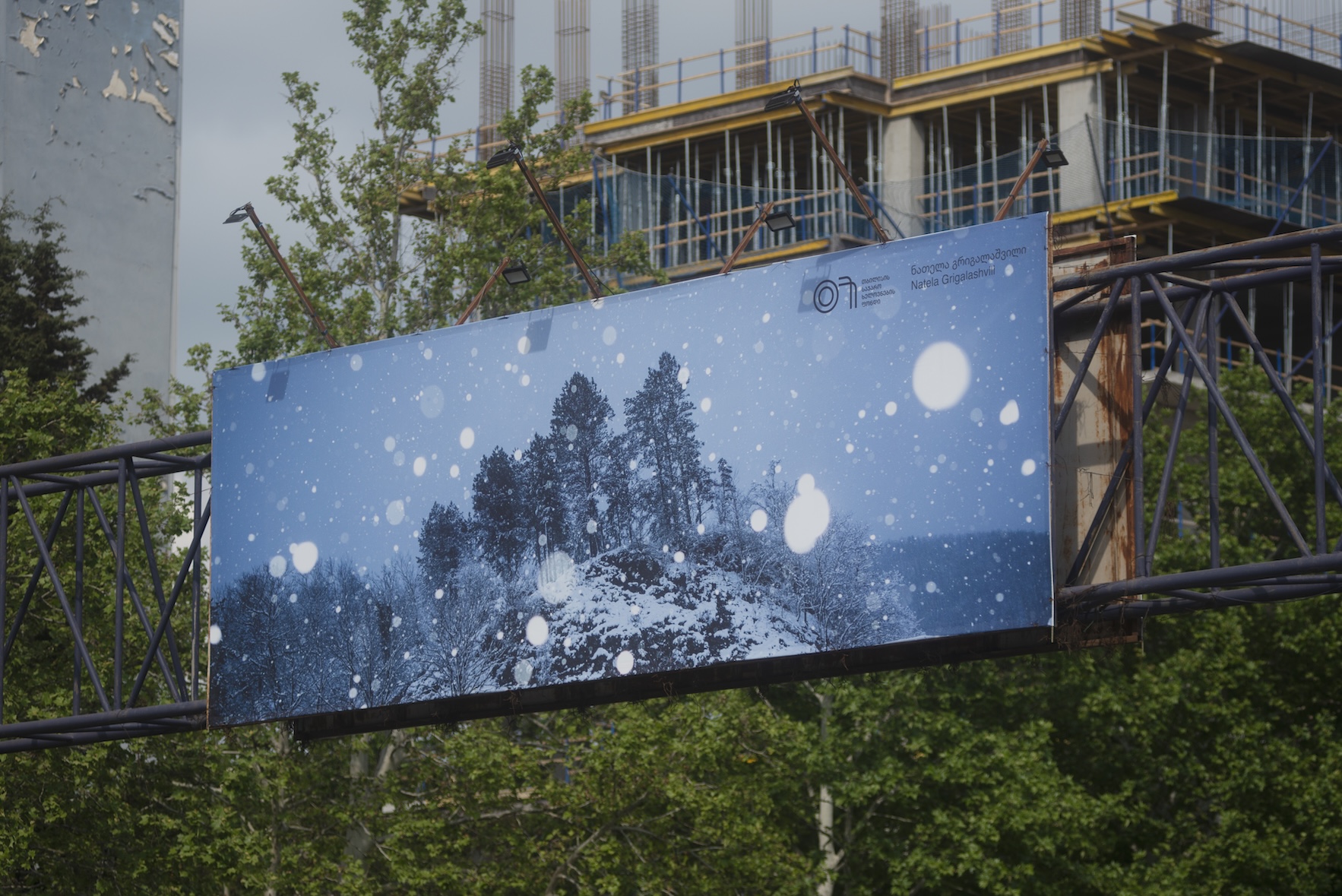
Natela Grigalashvili, Georgia Unseen, Billboards around the City, 2025
Perhaps this is why Grigalashvili's photography, on the one hand, fully retains its narrative character, while on the other, introducing the compositional logic of painting, which reaches its pinnacles through an understanding of spatial depth, a dramatic play of light, a precise sense of form and color, and individual emotional penetration. Perhaps this is why you see more in her photographs than is depicted. Moreover, along with sight, you also perceive sounds and smells.
In Natela Grigalashvili's photography, the author's voice is felt everywhere - that of a woman, a child or a mother, who often changes her roles through the lens and sees her characters sometimes as a child, sometimes as a mother, sometimes as a woman. However, despite this transformation, she never crosses the invisible line between herself and the environment. She always respects the person (portraits and narrative compositions) and also always shows her own role-shifted voice (landscapes).
Natela Grigalashvili's camera does not erase or change social reality for the sake of aesthetic effect. She is a remarkably truthful photographer, but at the same time she always reminds us of the invisible charm of the world that remains next to us, where it is possible to feel like a red poppy on a green field...
The modern urban city today is an active, chaotic and quite complex reality, the complexity of which is largely due to visual competition. It can be said that visual violence against the consumer often goes beyond the boundaries of marketing calculations. Endlessly displayed advertisements and the complete use of building facades well demonstrate this kind of pressure and attempt at immediate conquest. Advertising constantly tries to appropriate the gaze, instantly provoke emotions and manage people's desires. It is in this context that the presentation of visual art on advertising billboards, and in this case, the exhibition of Natela Grigalashvili, evokes a completely opposite impression and emotion in the viewer.
In this sense, the presented project - "Invisible Georgia" - acquires not only social, but also cultural value, as it momentarily pauses the crazy and chaotic rhythm of the city and invites the viewer to get to know Invisible Georgia.
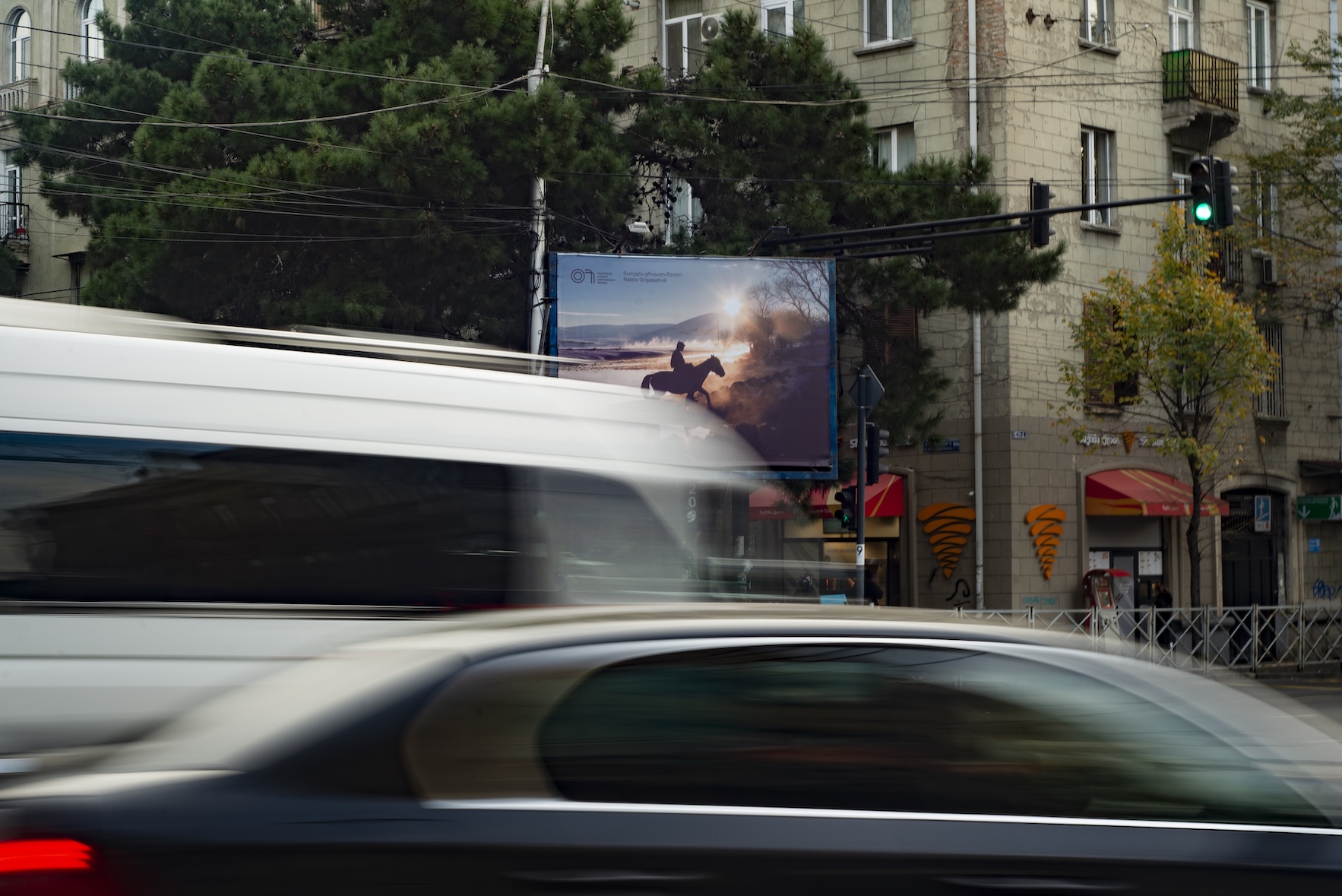
Natela Grigalashvili, Georgia Unseen, Billboards around the City, 2025
Tatia Gvineria (b. 1981) - is an art historian and cultural heritage expert based in Tbilisi. She graduated from the Faculty of Art History of the Tbilisi State Academy of Arts in 2003 and is currently pursuing her PhD at the same institution. She has participated in a number of important studies, including the "Cultural Heritage Management Plan", EBRD, "Gori Fortress. Visitor Infrastructure Project Concept", USAID, Kutaisi Master Plan, Ministry of Regional Development and Infrastructure of Georgia, "Support of the Culture Committee of the Parliament of Georgia for the Protection and Development of Historical Fortification Areas", UNDP, "Restoration Concept N. Pirosmani Street, I. Kargareteli Street, D. Agmashenebeli and Saarbrücken Avenues, "Dry Bridge" and Orbeliani Square", Tbilisi City Hall, "Cultural Heritage Monuments in Batumi", Ajara Cultural Heritage Protection Agency. She has curated the exhibitions "Pirosmani in Tsinandali", "Once Upon a Time in Holland - Piet Mondrian", "Salvador Dali in Tsinandali" Silkroad Group. She has authored numerous articles, including "The Unknown History of a Tbilisi House" Coup de Fouet, 2021, "A World Sculpted from a Black Background", NATIONAL GEOGRAPHIC Georgia.