

 View larger
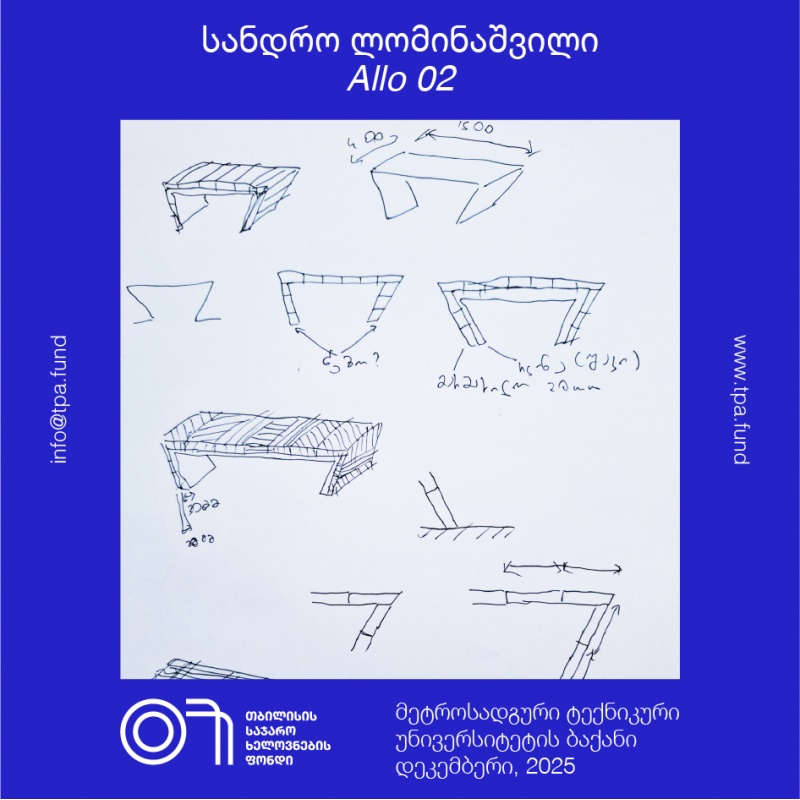
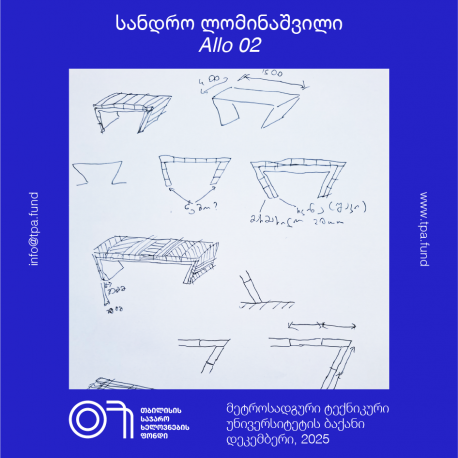
Sandro Lominashvili, Underground Station Technical University
= More info =
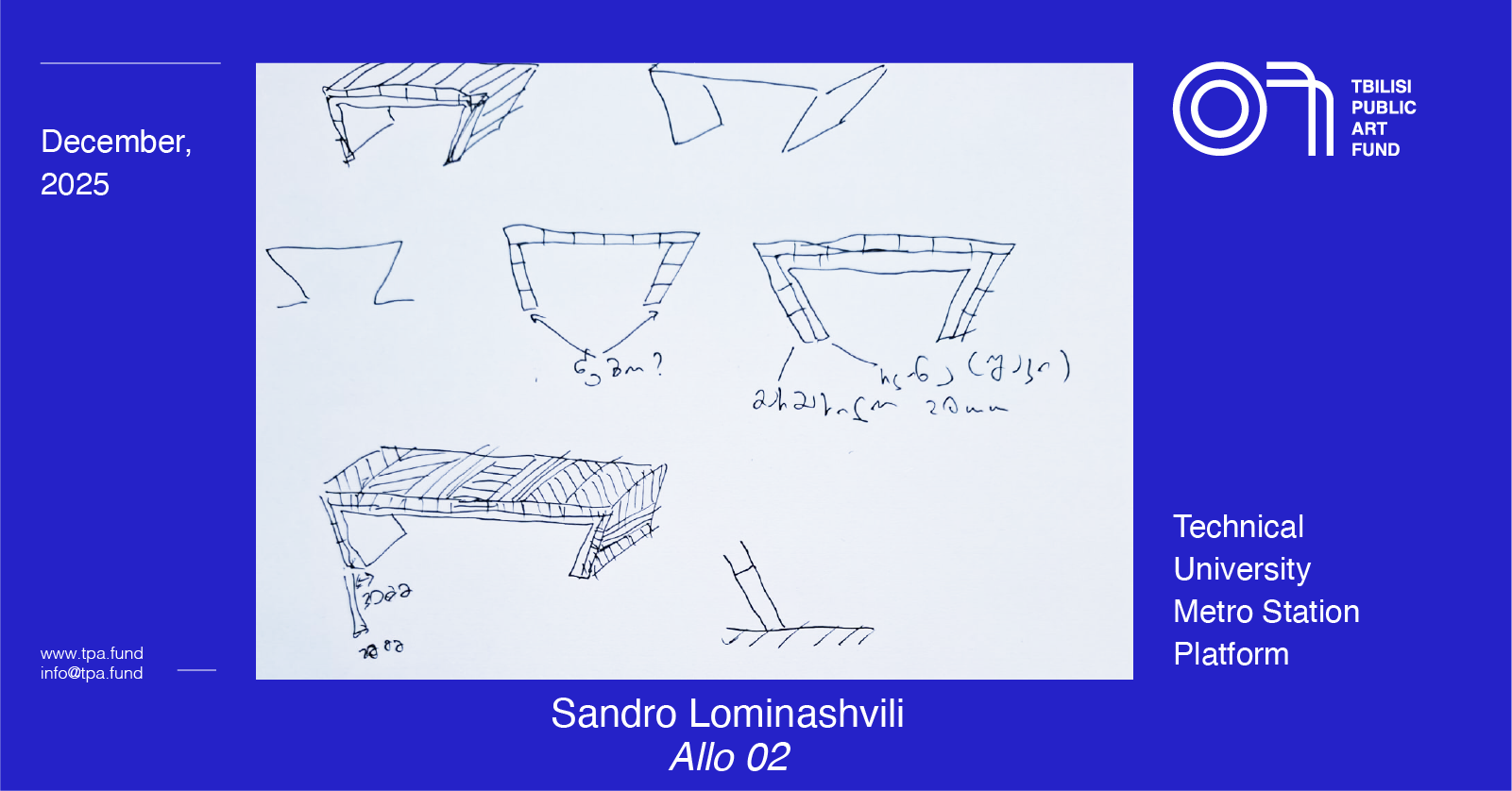
Tbilisi Public Art Fund is pleased to present Sandro Lominashvili’s project proposal “Allo 02”, which will be installed on the platform of Technical University metro station.
Sandro Lominashvili’s artistic practice is distinguished by a refined synthesis of art and functional design, where each project, alongside its aesthetic value, fulfills a specific practical purpose. The core idea of the presented initiative lies in this harmonious merging of the two directions — solving a spatial challenge through a creative approach.
In this case, the artist engages with the environment of the Tbilisi Metro — specifically the “Technical University” station — and proposes an especially thoughtful solution. The absence of seating on the platform causes clear discomfort for passengers and significantly complicates the waiting experience. Lominashvili’s proposal therefore not only introduces functional benefits but also adds a new visual identity to the space, making the station’s environment more welcoming and human-centered.
In developing a creative solution, Lominashvili looks beyond the physical characteristics of the space and connects his intervention to the historical layers of its surroundings. For him, understanding the Soviet heritage of the Tbilisi Metro is particularly important.
During the Soviet period, metro stations were conceived as “palaces of the people”: architecturally opulent spaces adorned with precious materials — marble, granite, crystal chandeliers, mosaics, and ornate details — offering citizens a sense that everyday life granted access to a grandeur previously reserved for the elite. In this context, decoration carried political and ideological weight, with architecture, art, and technological progress collectively forming a visual argument for the state’s prestige.
Against this historical backdrop, Lominashvili’s intervention may initially appear bold — introducing contemporary design into a distinctly Soviet aesthetic. Yet the artist succeeds in initiating this dialogue naturally and without intrusive disruption. For him, the key lies in the expressive potential of materials and their ability to bridge past and present. Marble — the signature material of Soviet metro stations — becomes, in his hands, a medium that connects the environment to contemporary sensibilities. He both establishes a conceptual and visual link with the platform and transforms the material in new ways, enriching it with fresh meanings.
The resulting “Allo 02” benches encapsulate Lominashvili’s creative signature. His design language is grounded in the deconstruction of classical objects and in subtle, almost imperceptible transformations. He often works with archetypal forms embedded in our visual memory, where even the smallest intervention can generate entirely new interpretations.
For “Allo 02,” Lominashvili reimagines the familiar, backless, elongated bench form typical of public spaces, altering one essential structural element: the traditional 90-degree angle of the legs is reduced to 60 degrees. This seemingly modest modification creates a visual impression of instability, as though the bench is on the verge of tipping or shifting. In reality, the object remains fully functional, with its stability meticulously calculated.
Through this approach, Lominashvili plays with perception, crafting an optical illusion that invites viewers to reconsider their reactions and ways of seeing. In this light, the bench transcends its utilitarian role; it becomes a poetic reflection on the relationship between stability and motion — on the invisible balances that shape objects, spaces, and experiences, and on the delicate equilibrium that underpins them all.
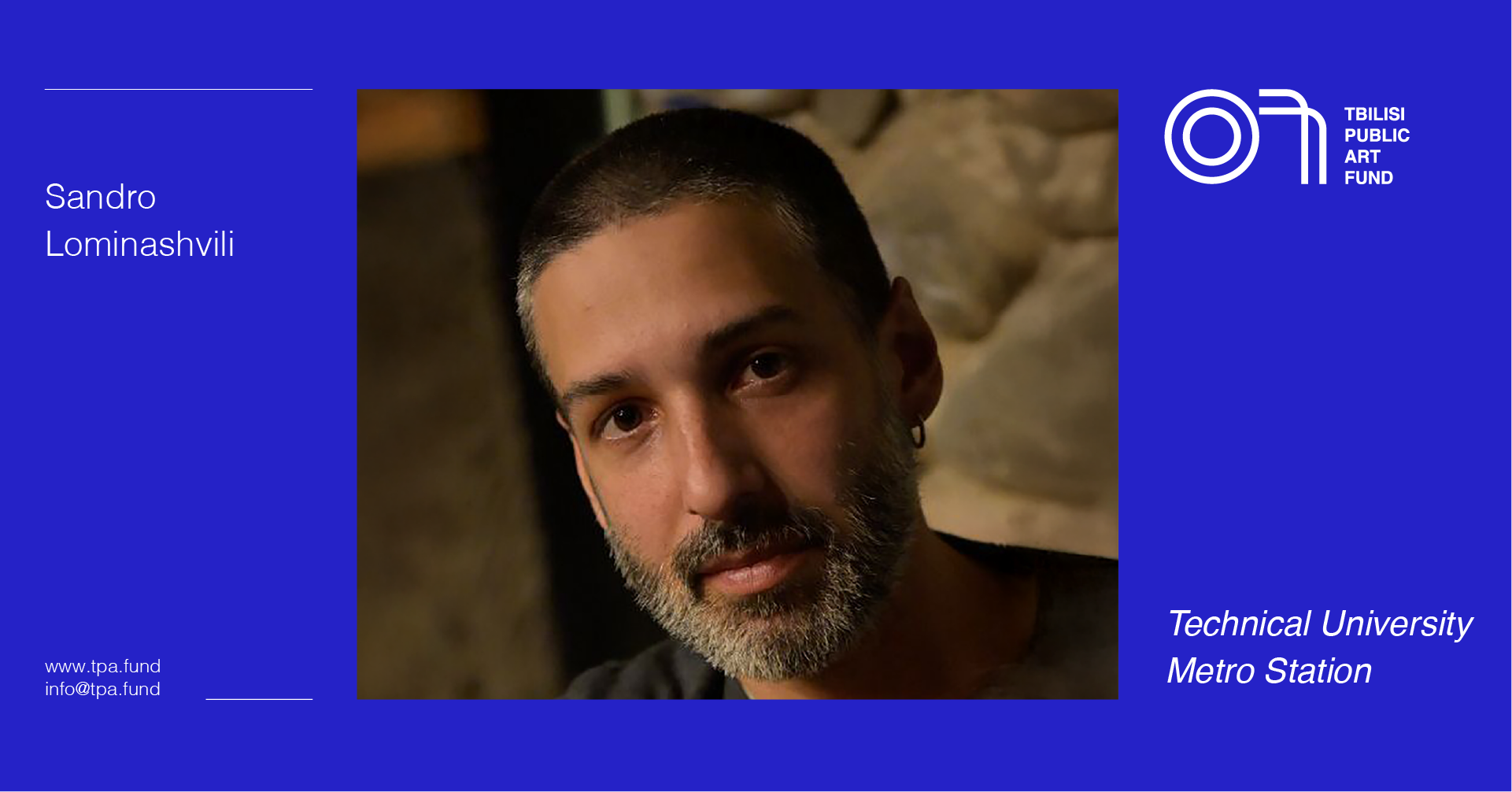
Sandro Lominashvili was born in 1989 in Tbilisi. He initially studied mathematics and engineering, and in 2011 continued his education in mechanical engineering at King’s College London. However, he soon realized that his true interests lay in art and design.
Since 2012, his professional focus has shifted to industrial design and spatial art. His practice combines sculpture and spatial design, with particular attention to the integration of art into architectural environments. He experiments with various materials, including stone and marble, to bring new life to functional and aesthetic objects in public spaces.
In 2014, he gained professional experience at the architectural and design companies “X Y Z Architecture” and “Rooms Studio”, where he worked on interior and object design as well as experimental spatial projects. From 2015 to 2022, he participated in international design festivals, including Design Junction (London Design Festival), Ventura Lambrate, and Salone Satellite (Milan Design Week).